12-day Mountaineering Course
FEATURES
- Designed for beginners: No previous outdoor or climbing experience is required. The course begins with the fundamentals and progresses as each student develops competence and confidence.
- Ten full days of field-based learning: The extended course length provides time to practice essential skills repeatedly and apply them to real expedition and climbing objectives. Students take on greater responsibility throughout the course.
- A maximum 1:3 instructor-to-student ratio: Small instructional groups provide close supervision, individual coaching, and meaningful opportunities for every student to participate.
- Preparation for independent mountain travel: The goal is not simply to guide students through a successful course. AMS teaches the camping, travel, climbing, leadership, and decision-making skills needed to return to the mountains and operate without supervision.
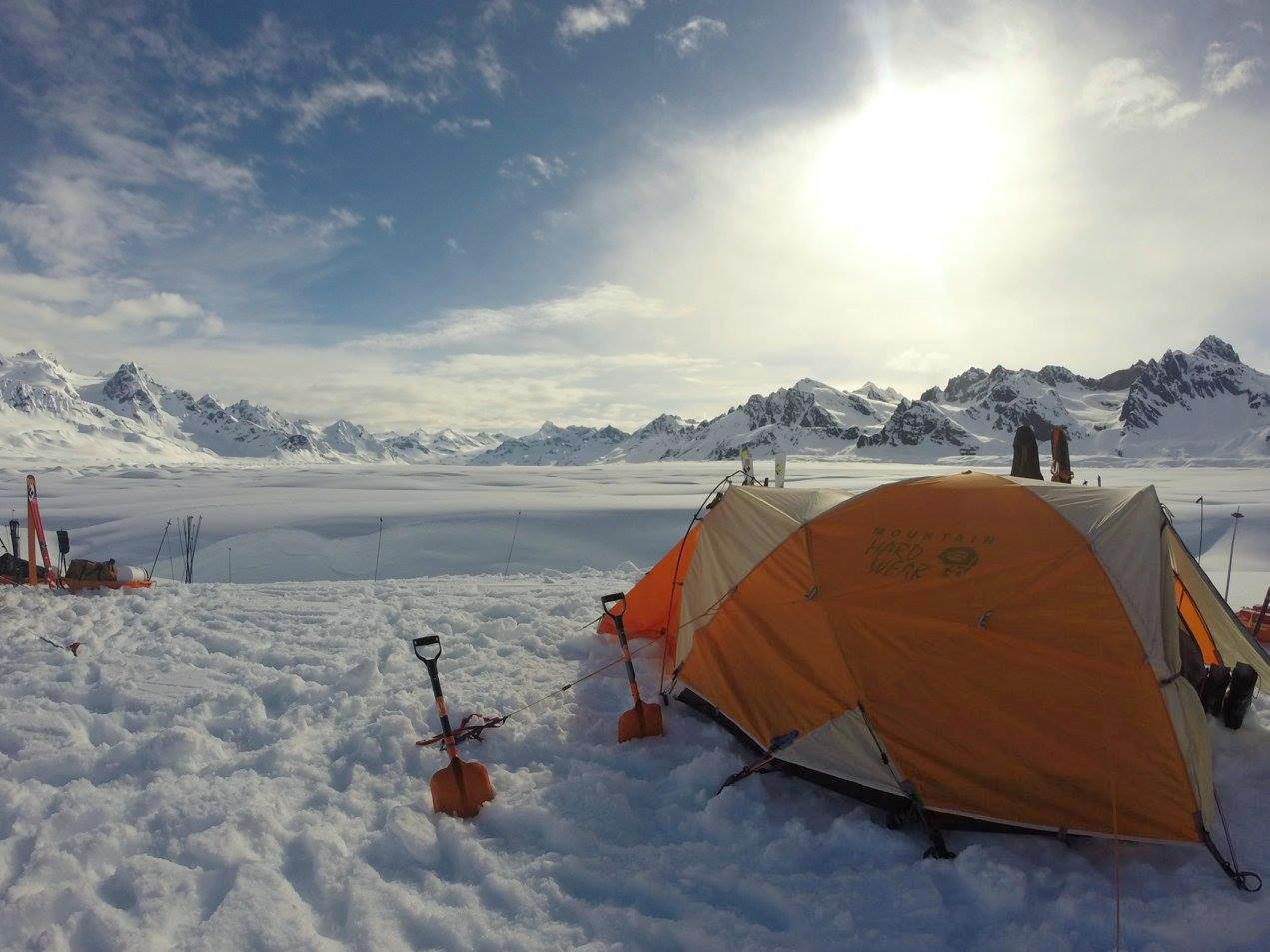
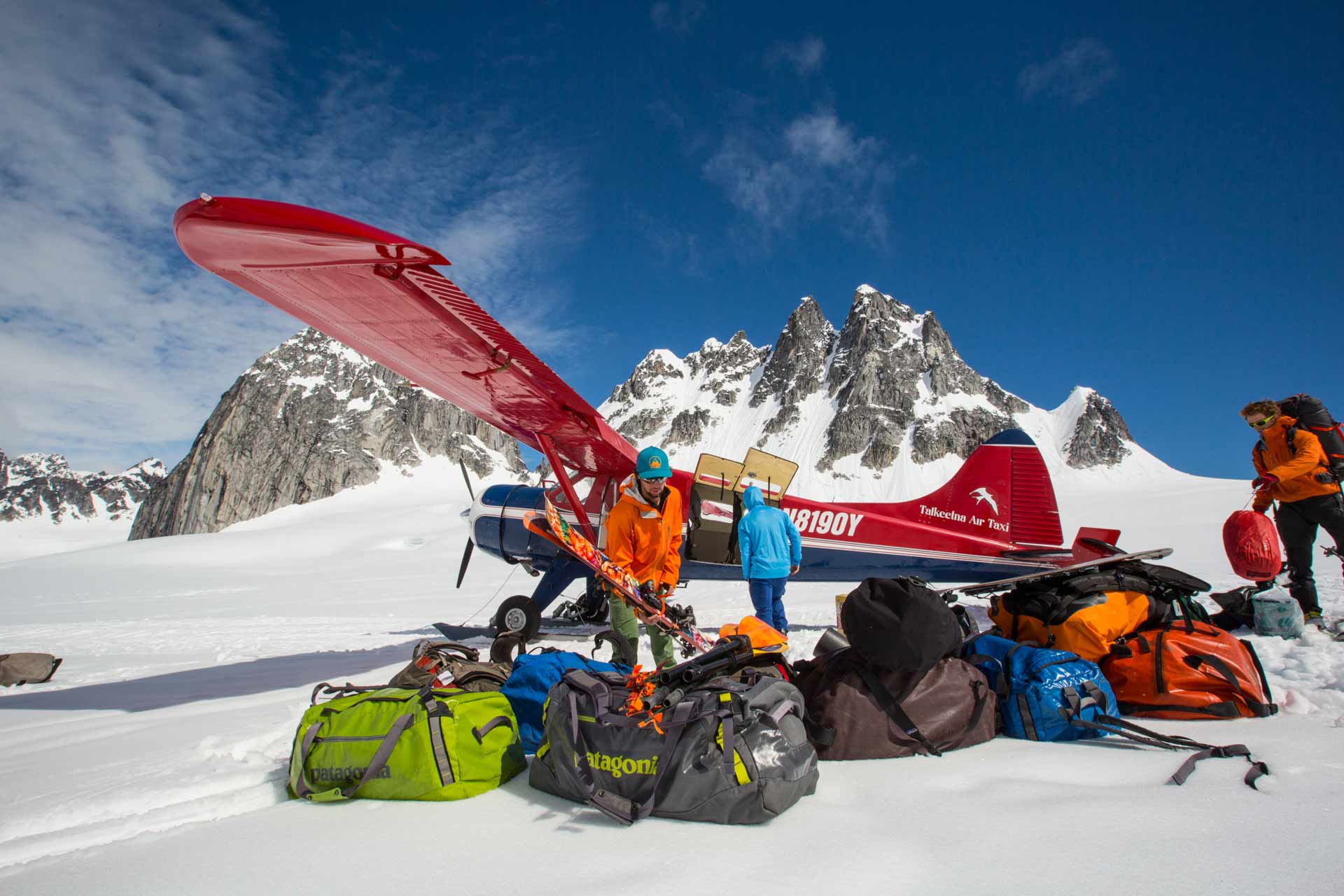
- A complete expedition system provided by AMS: AMS supplies and maintains the group tents, stoves, kitchen shelters, cooking equipment, ropes, anchors, sleds, emergency equipment, and other shared gear needed for the course. Students learn with dependable equipment selected specifically for Alaska Range expeditions.
- Expedition food planned and packed by AMS: Our dedicated food-packing room, freezers, and storage facilities allow AMS to plan, portion, and pack complete field rations before every course. Each cook group receives a carefully designed menu and a complete kitchen system. Students can concentrate on learning expedition cooking rather than shopping for and provisioning the course themselves.
- Crevasse rescue training before departure: Students begin practicing crevasse self-rescue at the AMS training facility before flying to the glacier. This creates a foundation that is reinforced in real terrain throughout the course.
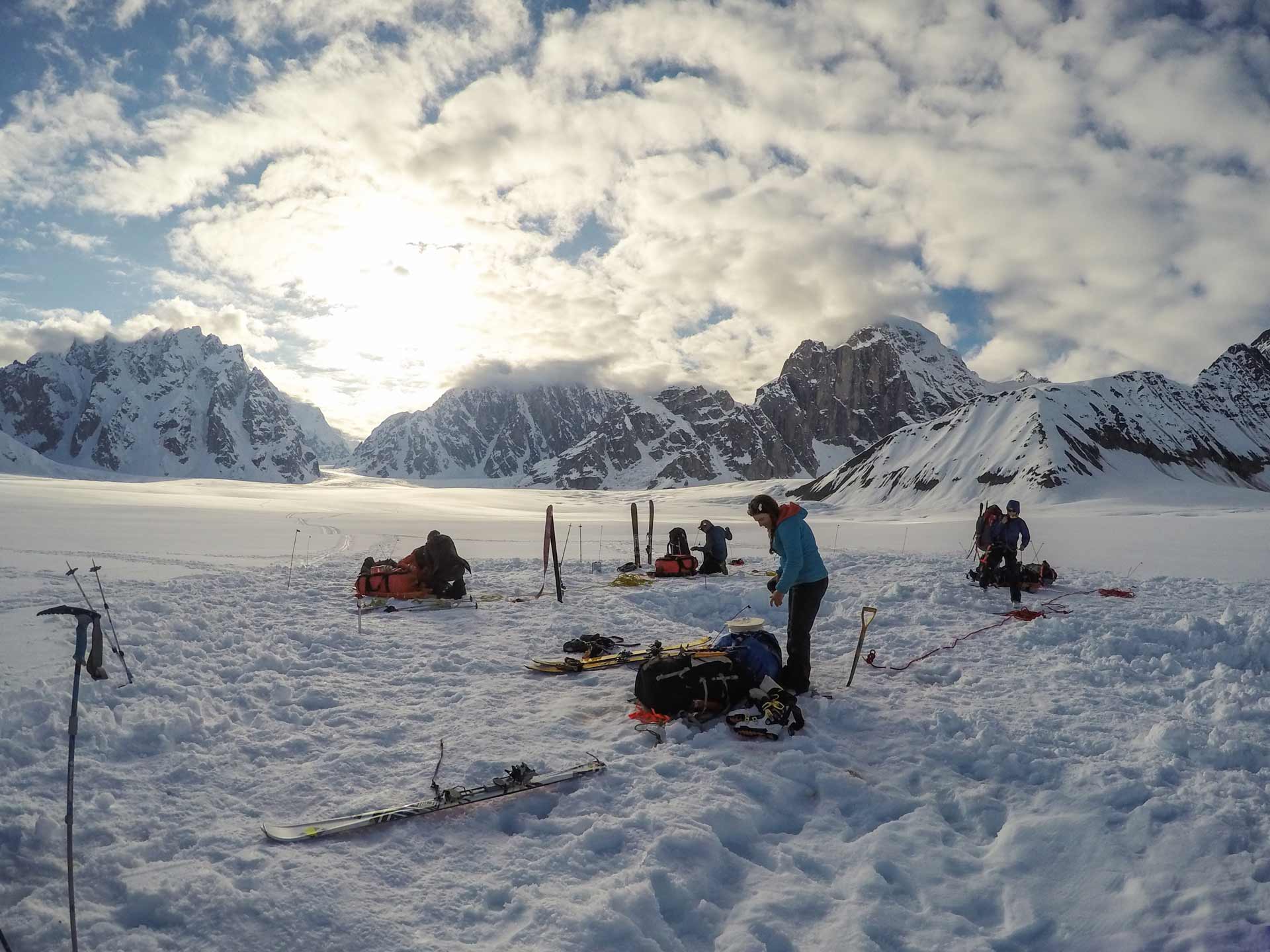
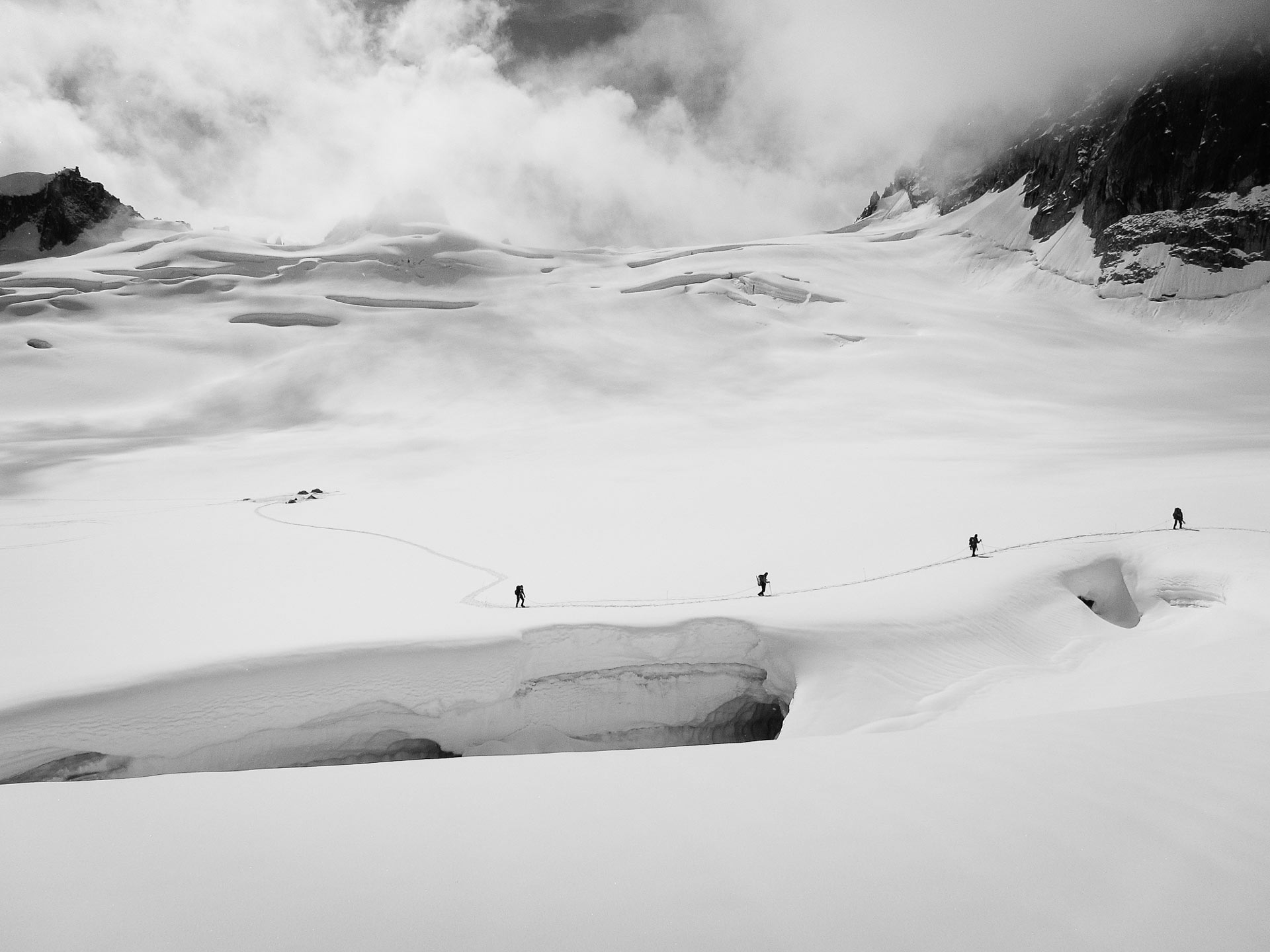
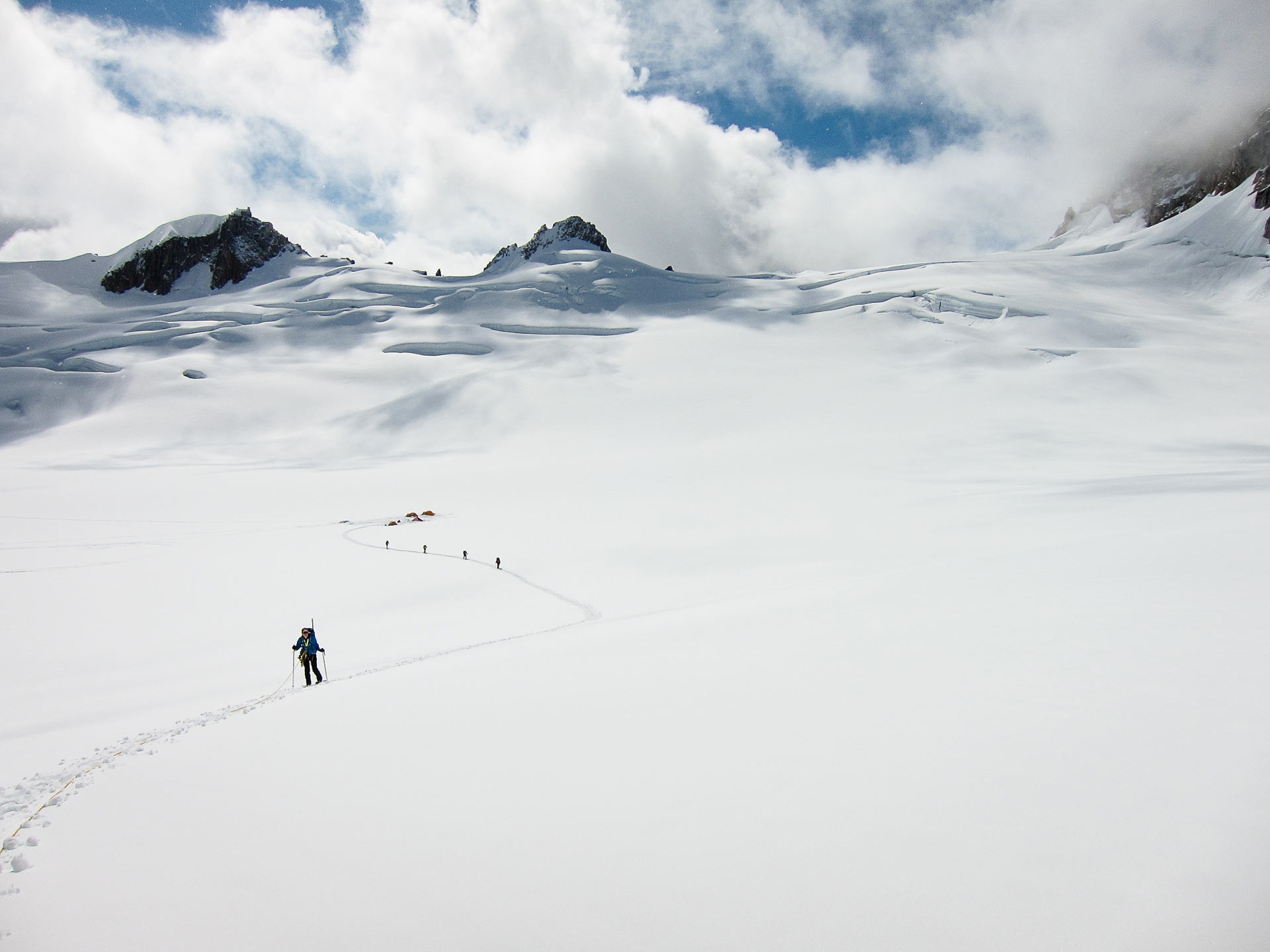
- A traveling expedition—not a base camp: Students repeatedly move through glaciated terrain, select campsites, and build organized, storm-resistant camps. Transporting all expedition supplies teaches students to manage loads, understand their carrying capacity, and distinguish essential equipment from unnecessary weight.
Schedule
April 17-28, 2027
May 2-13, 2027
June 5-16, 2027
June 19-30, 2027
July 2-13, 2027
September 1-12, 2027
What's Included
- Professional instructors, roundtrip glacier flight
- All food during your course and team lunch at AMS HQ on day 1
- All group camping and climbing equipment: ropes, tents, pickets, technical climbing gear, snow saws, wands
- Sled for each student, pre-rigged for roped glacier travel for use during the climb
- Snow kitchen equipment: kitchen tents, cooking stoves, utensils, and fuel
- Mountain communications: emergency use satellite phone, FRS on-mountain radios, Delorme In-Reach
- Maps, GPS
- Medical protocols, first aid, medication and repair kits
- Fully equipped staging area at AMS HQ and AMS Mountain Gear Shop in Talkeetna
- 24/7 support from staff at AMS in Talkeetna during your climb
- Regular social media updates during your climb
- Pre-course assistance with travel planning and training advice
- Post-course lodging and shuttle logistics
- Luggage storage and free parking during your course
- Camping at AMS HQ campground (tents are not provided)
- Welcome-back table with fresh foods and drinks after your course
- Knowledgeable staff to assist with lodging and shuttle logistics
This is a sample 12-day course itinerary. Activities vary depending on course location, weather, and snow conditions.
Day 1
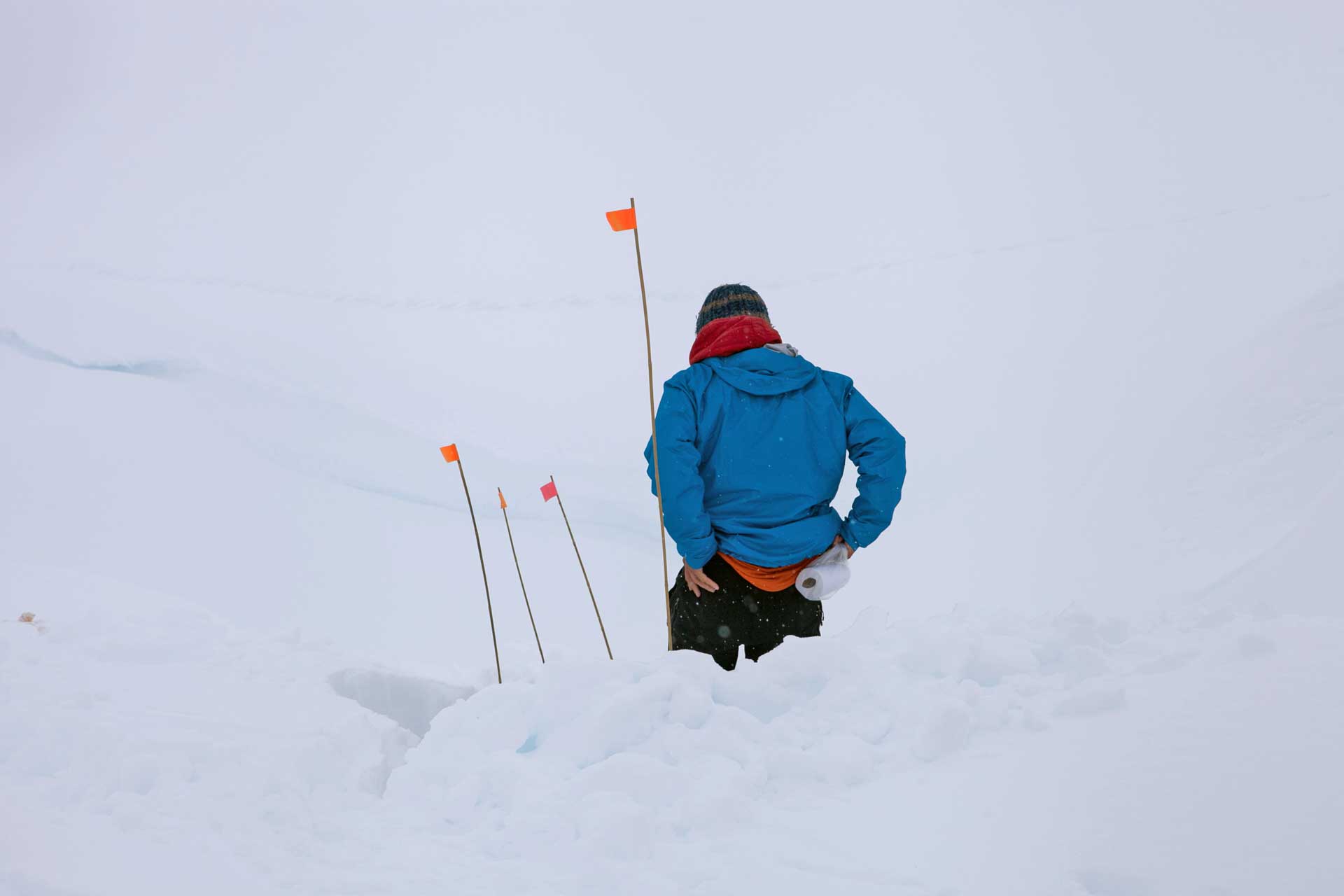
Meet with your instructors 8am at AMS in Talkeetna, muffins/tea/coffee provided, course orientation, individual gear check, lunch at AMS, register with NPS, climb fixed lines, final pack up and dress for the mountains, fly, build camp. Classes in Talkeetna: harnesses, basic knots, fixed line ascension, what to wear and how to pack for the plane; classes on glacier: scene safety, hygiene and sanitation, campsite selection, probing, perimeter camping, shovel use and care, tent platforms and walls, group outdoor kitchen, food id, stove use, basic cooking, evening class on “bomb proofing” camp, sleeping warm.
Day 2
Group breakfast, set up kitchen megamids, climbing ground school, basic crevasse fall scenarios, glacier tour/scout tomorrow’s crevasse. Classes: Rope id and care, climbing protection, anchors, belaying, roping up for glacier travel, self-arrest with ski poles, crevasse fall scenarios, transferring the load to an anchor, snow shoeing, glacier travel techniques; evening discussion: altitude-related injuries, what to bring in a day pack, weather observations.
Day 3
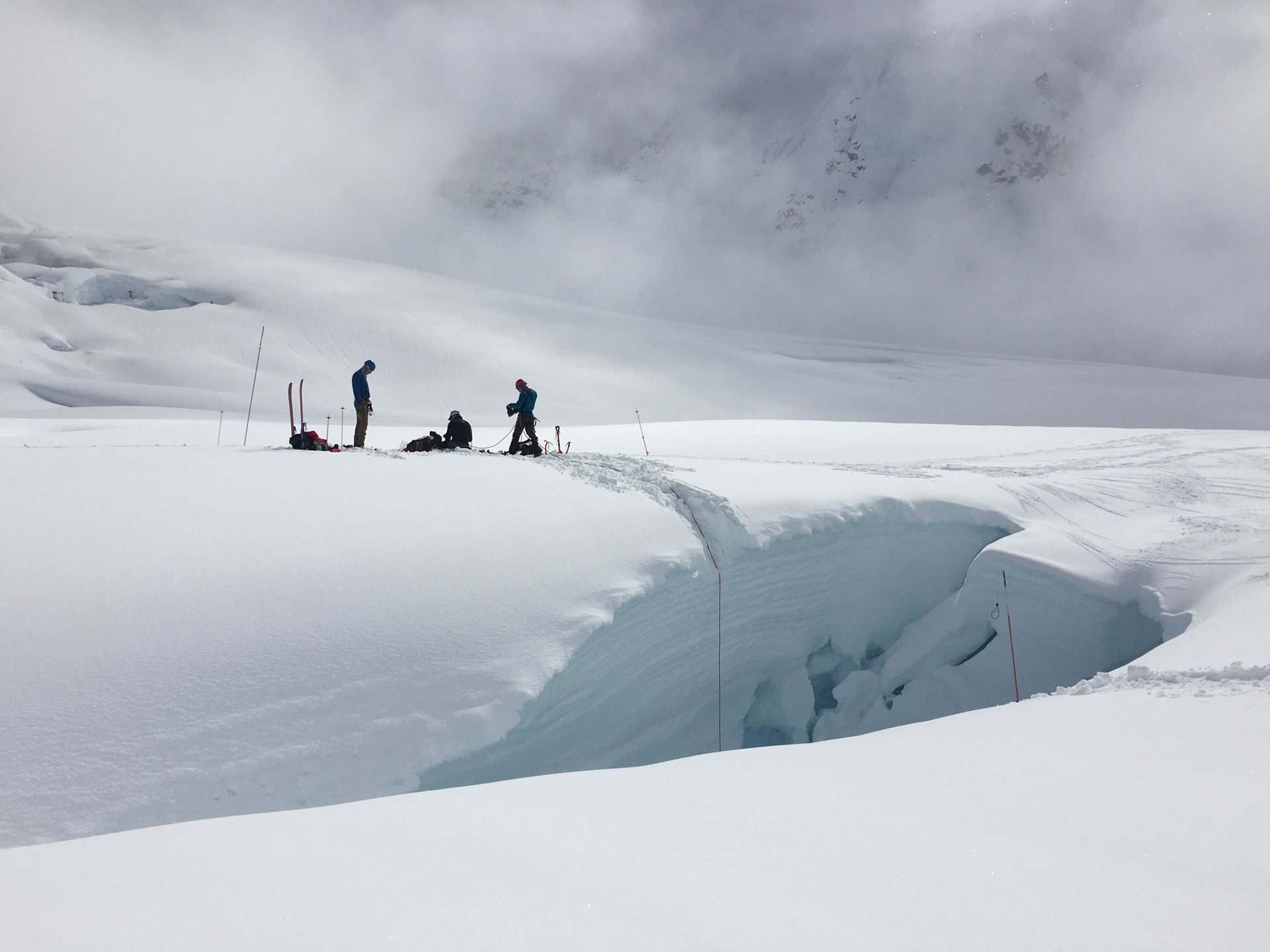
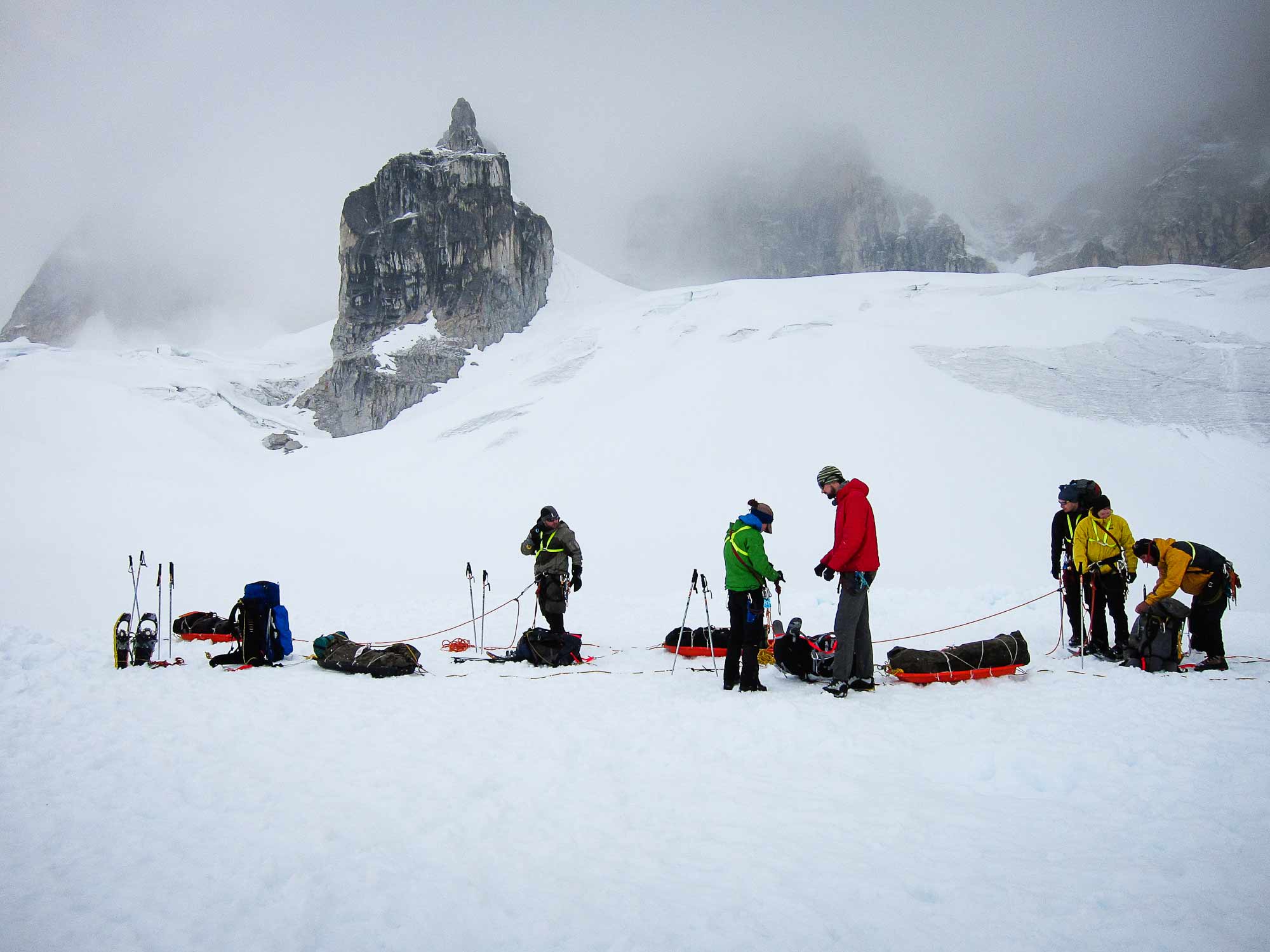
Rope up and head to crevasse for the day, probe out and establish crevasse rescue training area, build anchors, lower and raise each other out of crevasse, ascend climbing rope out of crevasse, student-led rope teams. Classes: Lowering, tying off, transferring the load, raising systems, what to do with pack and sled; evening discussion on avalanche mechanics & classification, weather observations.
Day 4
Break down camp, pack sleds, travel to new location and build camp, prepare for peak ascent. Classes: Packing packs and sleds, caching, roping up with sleds, navigation & route finding, transceiver searches; evening discussion on cold injuries, weather observations.
Day 5
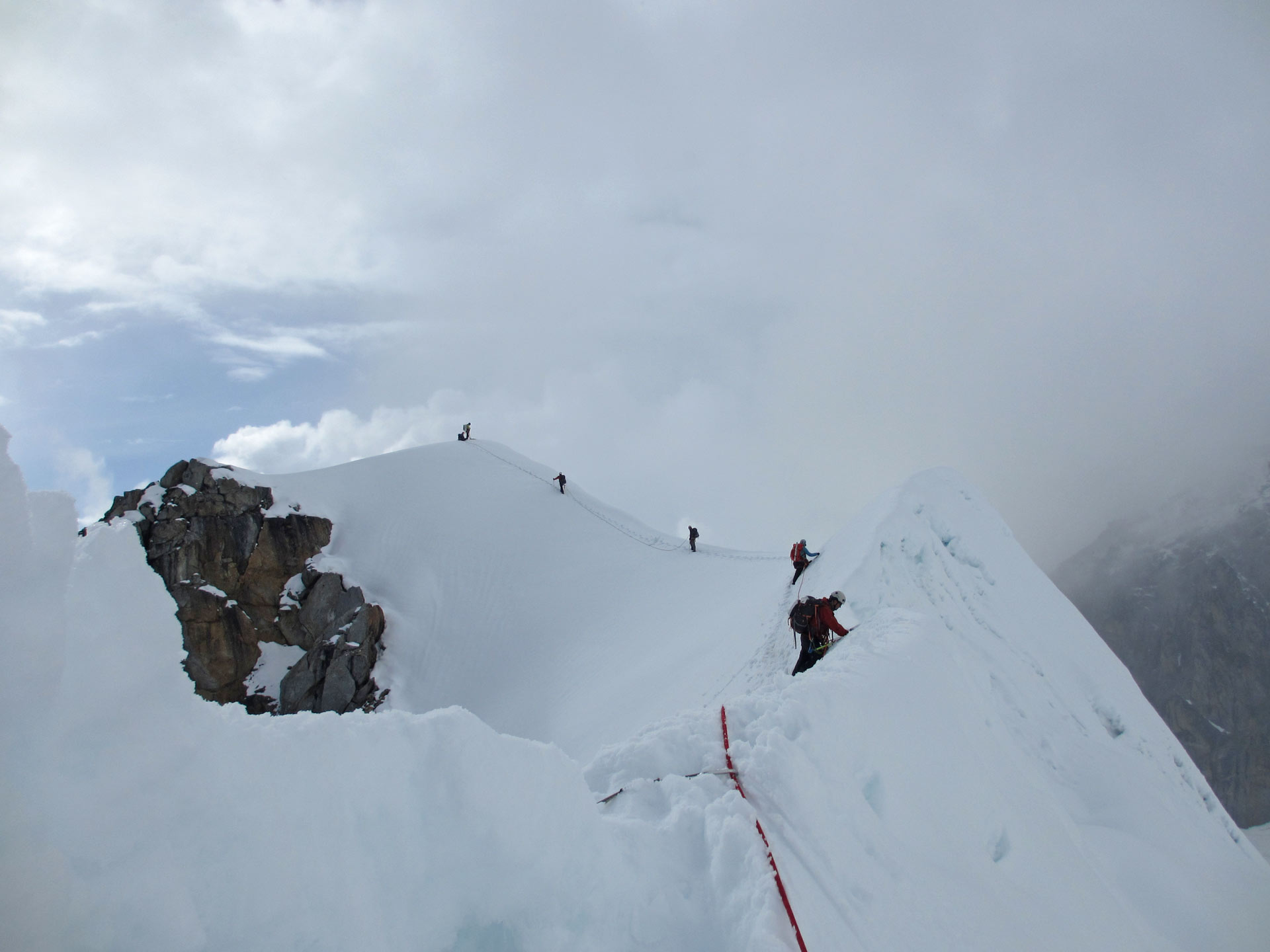
Summit day. Classes: Snow climbing techniques, running protection/belays, crampon use, snow stability tests, route finding; evening discussion on expedition behavior and leadership.
Day 6
Ice climbing, rappelling. Classes: Choosing a climb, setting up top ropes, moderate and steep ice climbing techniques, placing screws and threads, mock leads, rappelling ground school; evening discussion mid-course check-in, goals and expectations.
Day 7
Break down camp and move to snow shelter camp, student led rope teams, simulated crevasse fall. Classes: Snow shelters; evening discussion on difficulty ratings, climbing style, climbing history.
Day 8
Summit day, more challenging than first peak ascent. Classes: Geology, weather; evening discussion on snow shelter maintenance, emergency procedures.
Day 9
Move camp to rock climbing area. Classes: Rock climbing techniques-face and crack, placing rock protection, mock leads; evening discussion on altitude related illnesses.
Day 10
Summit day; route objective based on success of previous peak ascents, more student involvement in decision making and snow pack evaluation.
Day 11
Pack up and move back to landing zone, establish camp, student leaders of the day, write evaluations. Classes: Traveling in a white out, map and compass; evening discussion on wilderness ethics, land management issues.
Day 12
Prepare airstrip, fly out, return to AMS, return rental equipment, clean and organize group gear, exchange evaluations, group dinner at a local restaurant.
This is an introductory course suitable for people with no mountaineering experience. Prior experience backpacking, tent camping, and belaying will put students at an advantage, but are not required. Participants should arrive in good physical condition with a positive attitude and a desire to learn. They should be willing to work hard, have an open mind and be a team member.
I love that while AMS can boast expert guides, it is not a “guide service,” but truly lives up to its name as a mountaineering school, genuinely committed to what we can learn in the mountains about climbing and about ourselves. — Jana Loeb
You guys were all great. Your company really has a family feel to it… you really put the competition to shame. My last climb was with another (highly regarded) company, and trust me, there is no comparison. Hands down you guys were superior. Keep doing what you are doing. When I climb Denali in a year, you guys will get my call… I have you on speed dial.
— Tony Robles
All of the AMS guides and staff were amazing! Our guides were fun, positive, patient, and had a passion for teaching and mountaineering. The staff was easy to reach by phone and always quick to email, and they were fun and extremely friendly. In summary, I highly recommend a course through AMS! Specifically, I recommend the 12-day course for the most opportunity to see the varying conditions of the glacier.
—Joe Romeo